Nepal
Kathmandu’s heritage cities, sacred sites, Pokhara, Chitwan and Himalayan escapes—woven together with boutique stays, refined pacing and thoughtfully guided experiences.

Kathmandu Valley, Heritage Courtyards and Boutique Retreats
The smell reaches you first — incense curling out of temple doorways, marigold garlands warming in the morning sun, the faint sweetness of butter lamps burning since before the city woke. Kathmandu does not announce itself; it simply surrounds you.
The valley holds three ancient kingdoms within a few miles of each other, and wandering between them feels less like sightseeing and less like stepping through a living manuscript of Newari civilisation. In Bhaktapur, medieval courtyards open onto pagoda temples where devotees leave offerings as their grandparents did. In Patan, intricately carved wooden lattices frame the windows of palaces that have stood since the Malla kings held court inside them.
At day’s end, your boutique retreat — a restored merchant house or a quiet garden property — draws you back into a different kind of intimacy: low lit rooms, hand-woven textiles, the sounds of the valley softening outside your window.
Kathmandu is not a destination you see. It is one you slowly absorb.

Boudhanath & Pashupatinath, Patan & Bhaktapur
There are places in the world where the sacred is not displayed behind glass but lived in, breathed in, walked through barefoot. In the Kathmandu Valley, those places come one after another, each one quietly reshaping you.
At Boudhanath, the great white stupa rises from the valley floor like a meditation made solid — its painted eyes gazing out over a slow circle of monks, pilgrims and prayer wheels that has been turning for centuries. Nearby, Pashupatinath unfolds along the banks of the Bagmati: ghats, sadhus, and the particular stillness that settles over a place where life and death are conducted in full view of each other.
Patan draws you into its Durbar Square — a courtyard so dense with temples, bronze statuary and Newari craftsmanship that it reads as a single, extraordinary act of devotion. Bhaktapur answers with its own quiet grandeur: pottery wheels spinning in the dust, woodcarvers at their lattices, a medieval city that has not forgotten what it is.
Go before the day grows loud.
Everest View Stays
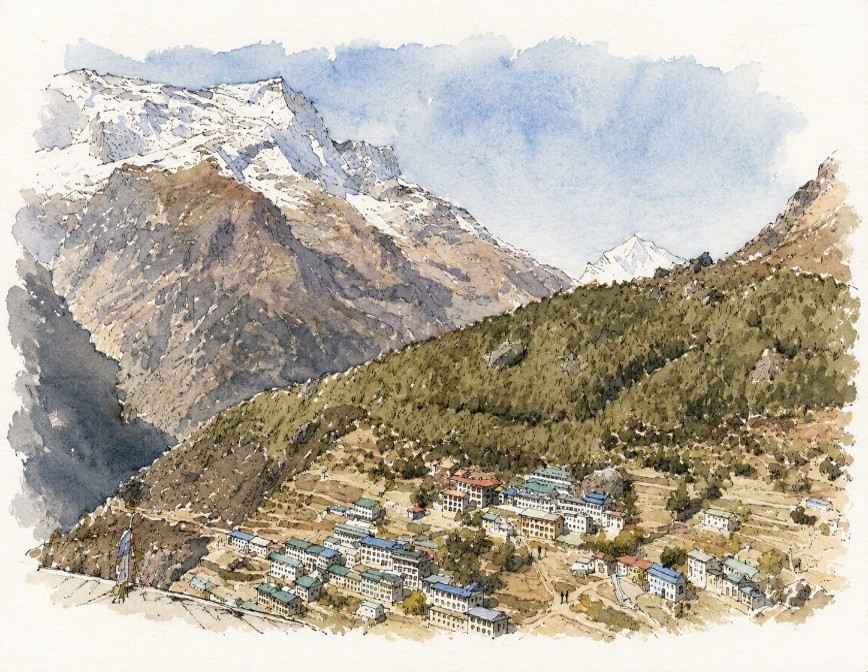
The mountain does not announce itself. One moment there is only sky, and then — between a gap in the clouds or above the ridge of a forested hill — it is simply there. White, vast, and so much more present than any photograph has ever managed to suggest.
In the lodges and boutique stays that sit among the Khumbu valleys, you wake to a world that moves at altitude’s own pace — slower, quieter, stripped of everything unnecessary. Sherpa families who have lived in the shadow of the world’s highest peaks for generations carry their culture with a warmth and dignity that stays with you long after the mountains have receded from view.
You trek to a viewpoint as the first light touches Everest’s summit and turns it briefly, impossibly gold. A monk spins a prayer wheel at a mani wall. Yak bells carry across a valley that has not changed in centuries.
This is not adventure travel. This is communion with something ancient and indifferent and astonishingly beautiful.
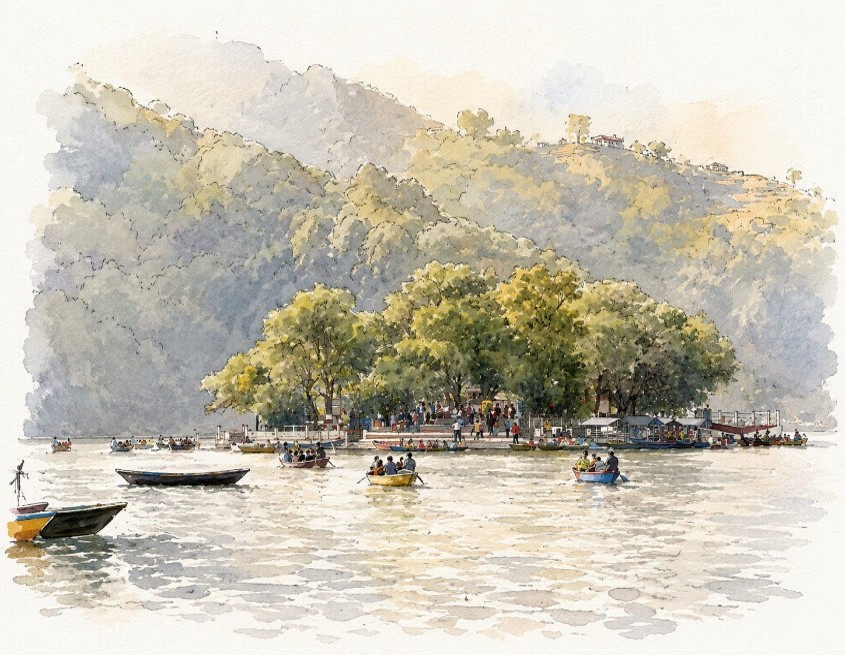
Pokhara Lakeside
Phewa Lake holds the Annapurna range in its reflection so perfectly that for a moment you cannot be certain which is the mountain and which is the mirror. Pokhara arranges itself around this view with the unhurried grace of a town that has always known it sits somewhere exceptional.
The mornings here belong entirely to light — the kind that arrives slowly over the Himalayan wall and sets the water glowing before the rest of the world has thought to stir. From the verandah of a well-chosen lodge, a cup of Nepali tea warming your hands, the Annapurnas filling the horizon from east to west, it becomes very difficult to remember why anything else ever seemed urgent.
By day, the valley opens into villages, monastery trails and viewpoints where the scale of the mountains rearranges something quietly inside you.
The luxury here is not in the thread count, though the lodges earn their reputation. It is in the quality of the stillness.
Nepal rewards those who pause.

Chitwan Safaris
The jungle announces itself before you enter it — a density of birdsong, the rich green smell of the Terai, the sense that the world beyond the treeline operates by entirely different rules. In Chitwan, that world belongs to the one-horned rhinoceros moving through tall elephant grass, to the gharial basking on a sandbank above the Rapti river, to the Bengal tiger that may or may not reveal itself, but whose presence you feel regardless.
A private naturalist changes everything here. What was simply a forest becomes a layered, breathing system — every pugmark read, every alarm call interpreted, every bend in the river understood as habitat rather than scenery.
The riverside resorts that frame this wilderness earn their place not through ostentation but through stillness — open-air dining as the river catches the last of the evening light, the sounds of the jungle replacing whatever it was you were worried about before you arrived.
Chitwan does not perform for you.
It simply exists, magnificently, and invites you in.

World Heritage Nepal
Kathmandu does not ease you in gently. The valley announces itself in temple bells and incense smoke, in the spin of prayer wheels worn smooth by ten thousand hands, in the sight of a medieval city that somehow continues to function as a living, breathing place of worship rather than a carefully preserved relic.
The UNESCO sites here — Pashupatinath, Boudhanath, the Durbar Squares of Kathmandu, Patan and Bhaktapur — are not monuments to a vanished civilisation. Priests still perform rituals that predate written history. Newari craftsmen still work the same wood and metal their ancestors shaped a thousand years ago. The art is not in the museum; it is on the street corner, above the doorway, in the courtyard that opens unexpectedly from a narrow lane.
And when the valley begins to feel too full of humanity, the mountains are always there — close enough for a morning flight to Everest, or a quiet drive into hills where the air clears and everything simplifies.
Nepal carries its history lightly, and beautifully.